
Oven repair in Stafford, VA
Not heating, baking unevenly or stuck locked after self-clean. Gas, electric and wall ovens.
 Swift and Reliable
 Straight answers
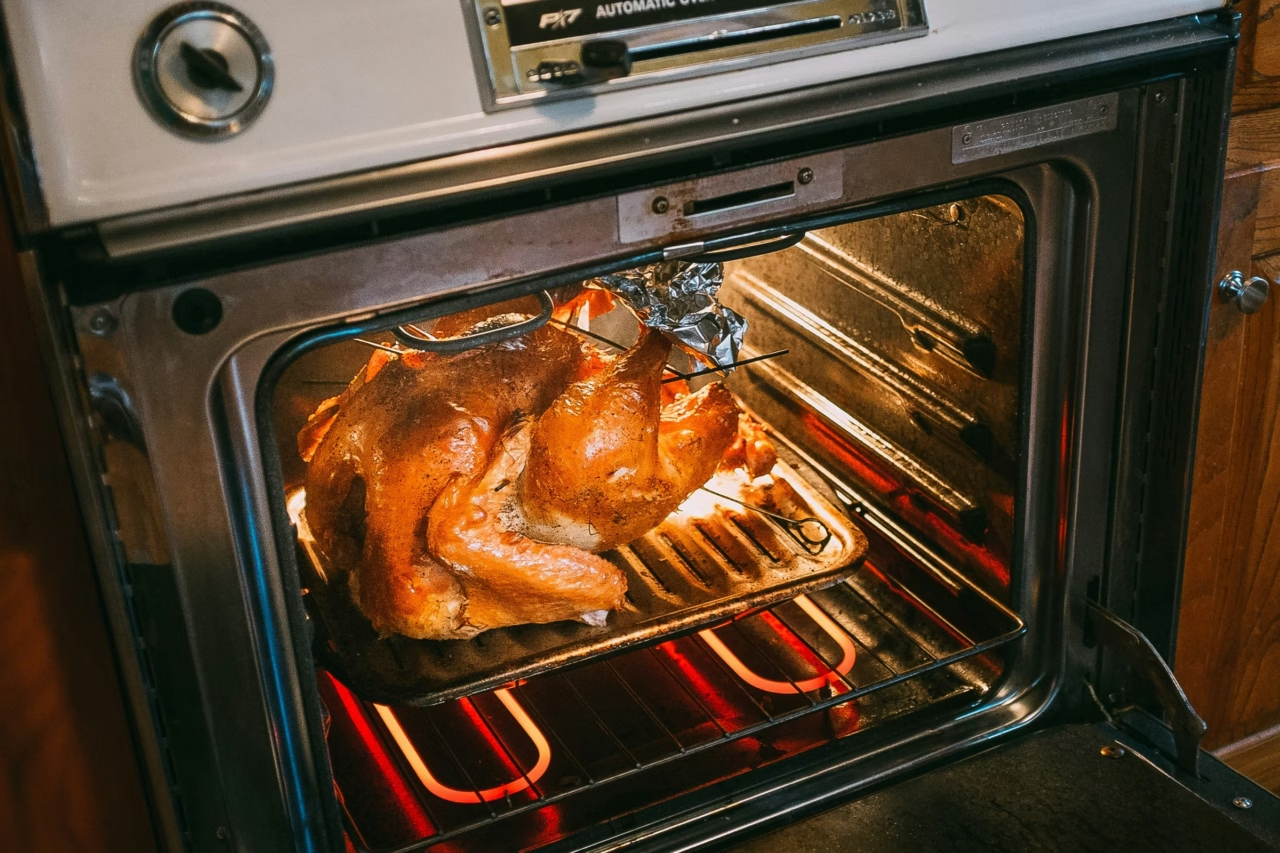
An oven that won’t heat, or heats to the wrong temperature, usually has one failed part. On electric ovens it’s often the bake or broil element, the temperature sensor or a relay on the control board. On gas ovens the most common failure is a weak igniter that glows but can’t open the gas valve.
We repair ovens in freestanding and slide-in ranges, single and double wall ovens, and convection models. We’ll test the parts that matter, show you what we found and give you a straight answer on the fix.
Book a oven repair
- Arrival windowWe text when we're 30 minutes out.
- A price before any work startsYou decide whether to go ahead.
Common problems
What goes wrong with a oven, and what we check
-
Oven won't heat
What we check
On electric ovens we test the bake element for continuity and look for breaks or blisters. On gas ovens we measure the igniter's current draw, since a weak one glows but won't light.
-
Oven temperature is off
What we check
We test the temperature sensor's resistance and wiring, then check the actual temperature against the setting with a thermometer. Many ovens also allow a small calibration adjustment.
-
Broiler won't heat
What we check
We test the broil element or, on gas ovens, the broil igniter and burner. A failed element often has a visible break or bubble along its surface.
-
Door locked after self-clean
What we check
We check the door lock motor and switch, and the control board that releases them. Letting the oven cool fully and resetting power at the breaker sometimes clears it.
-
Food bakes unevenly
What we check
We check the bake element, the convection fan and its element, and the door gasket for heat loss. Rack position and dark pans matter too, and we'll tell you if that's all it is.
-
Error code on the display
What we check
A code points to a circuit, not always a part, so we test before replacing anything. Common culprits are the sensor, the door lock and the control board relays.
Straight answers
Is it worth fixing?
Ovens typically last 13 to 15 years, and most repairs, including elements, igniters, sensors and door locks, are straightforward and worth doing.
The main exception is a failed control board on an older oven, where boards can be costly or no longer made. If the repair costs more than half the price of a comparable new oven, or it’s near the end of its typical life, replacing it usually makes more sense. Wall ovens cost more to replace and must fit the existing cutout, so repairs stay worthwhile longer.
Brands we service
- Bosch
- Electrolux
- Frigidaire
- GE
- Kenmore
- KitchenAid
- LG
- Maytag
- Samsung
- Whirlpool
Don't see yours? Tell us the make and model when you book and we'll confirm before we come out.
How a visit works
From booking to a working oven
-
Book
Pick a time online or call. You get an arrival window and a text when we are 30 minutes out.
-
Diagnose
We test the appliance, find what failed and give you a price before any work starts.
-
Fix
We repair it on the spot when we have the part. If it has to be ordered, we tell you when we will be back.
-
Covered by warranty
The parts we fit and the work we do are covered by our warranty.
Before we arrivePlease let the oven cool completely and take out the racks, pans and anything stored inside or in the drawer below. For wall ovens, clear the counter or floor space in front so we have room to work.
What it costsYou'll have a price for the repair before any work starts.
FAQ
Oven repair questions
Still have a question? Call (540) 922-7111
Why does my gas oven take so long to preheat?
If it’s much slower than it used to be, suspect the igniter. As it weakens, it takes longer to draw enough current to open the gas valve, so the oven lights late.
Eventually it stops lighting altogether. Replacing the igniter is a routine repair.
Is it safe to use the self-clean cycle?
Self-clean heats the oven to around 800°F or more to burn off residue. That heat is hard on parts, and it’s a common moment for a weak element, fuse, lock or control to fail.
Wipe up heavy spills first, keep the kitchen ventilated and move pet birds to another part of the house, since the fumes can harm them. It’s best not to run it right before a holiday meal.
Should I calibrate my oven?
If food keeps coming out overdone or underdone, check the real temperature with an oven thermometer on the middle rack. Preheat to 350°F and average a few readings over 20 minutes, since the oven cycles above and below the set point.
If the average is off by about 25°F or less, many ovens let you adjust the offset from the control panel (your manual explains how). If it’s off by more, the sensor or control is the likely cause.
Related repairs
We fix these too

Stove and range repair
Burners that won't light, won't heat or won't turn down. Gas and electric ranges and cooktops.

Refrigerator repair
Not cooling, leaking or icing up. We find the cause and keep your food safe.

Dishwasher repair
Standing water, dirty dishes or a leak under the door. We find the fault and get it cleaning again.
Something stopped working? We'll take a look.
Book online in a couple of minutes, or call and speak to the team.